
Key Takeaways
- Countertop edge profiles are a design decision, not an afterthought. The profile sets the tone of a room, affects safety and cleaning, and it can change the cost of a slab.
- Eased and square edges lead modern kitchens. Their clean lines pair well with quartz and other solid surfaces, which is why builders default to them.
- Ornate profiles suit traditional spaces. Ogee, bullnose, and beveled edges add classic detail but cost more labor and collect a little more grime.
- Material drives what’s possible. Hard surfaces like quartz handle almost any edge, while softer or thinner stone limits the options.
- Houston trends favor clean and bold. Eased profiles still rule volume builds, but waterfall islands and mitered edges are showing up in higher-end local kitchens.

Why Countertop Edge Profiles Matter More Than People Think
Countertop edge profiles are easy to overlook, yet they shape how a finished kitchen or bath actually looks. The edge sits right at eye level. It gets touched every day. A crisp square cut reads modern, while a soft bullnose reads classic, so the same slab can feel like two different countertops depending on the profile. The right one pulls a room together. The wrong one can make even premium granite countertops look unfinished.
There’s more to it than style, too. A countertop edge does three jobs at once. It sets the visual tone, it changes how safe and easy the counter is to live with, and it affects the final price. That last point is bigger than people expect, and the granite countertops pros and cons guide breaks down how material choice plays into it. Rounded edges are gentler on hips and toddler foreheads. Simple edges wipe clean in seconds. Detailed edges take more shop time, so they’ll cost more to fabricate. That’s a lot riding on a detail most people pick last.
The Most Popular Countertop Edge Profiles
There are dozens of edge variations, but most kitchens use one of a handful of core cuts. Here are the profiles that come up most often, from the cleanest to the most decorative.
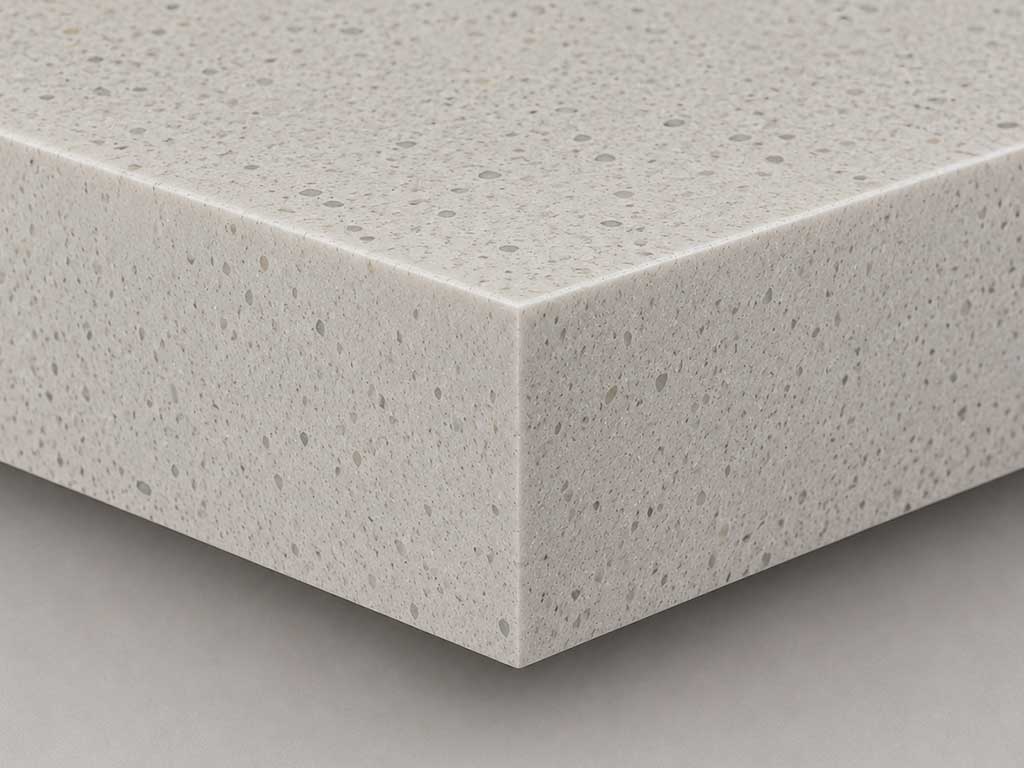
Square (Straight) Edge
A square edge is a flat, 90-degree cut with sharp, defined corners. It’s the most modern profile on the list, and it shows off the full thickness of the slab. It works beautifully on quartz and other engineered solid surfaces, where the material won’t chip easily. On natural stone like granite or marble, those crisp corners can be more fragile, and they aren’t ideal in a home with small kids. Still, for a clean contemporary look, there’s nothing better.
Eased Edge
The eased edge is the most popular profile in the country right now, and it’s not hard to see why. It’s basically a square edge with the sharp corners softened off, usually at about a 1/8-inch radius. The result keeps that linear, modern feel without the bite. It’s safer to lean against, simple to clean, and it preserves the full look of the slab. Most builders and fabricators treat it as the standard. Many shops include it at no extra charge.
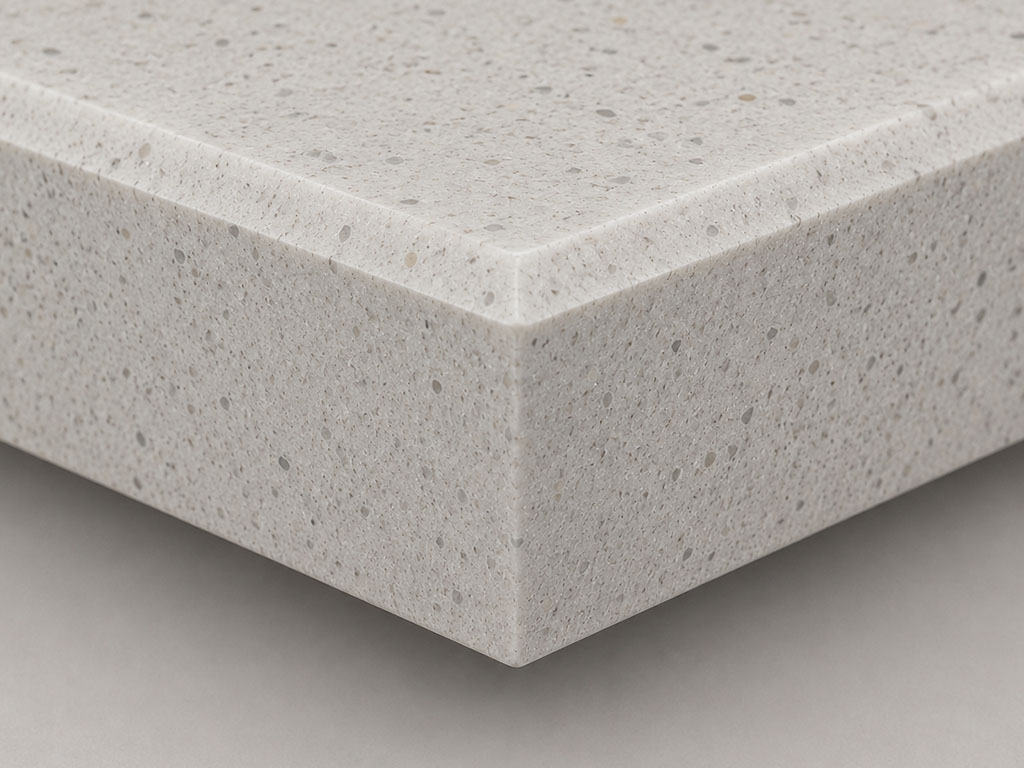
Beveled Edge
A beveled edge has a flat, angled cut across the top corner, usually at 45 degrees. That angle catches light and adds a touch of detail without going full ornate. It suits both contemporary and transitional kitchens. There are variations, including a double bevel that angles both the top and bottom. One small note: crumbs can gather along the angled face, so it needs a quick wipe now and then.
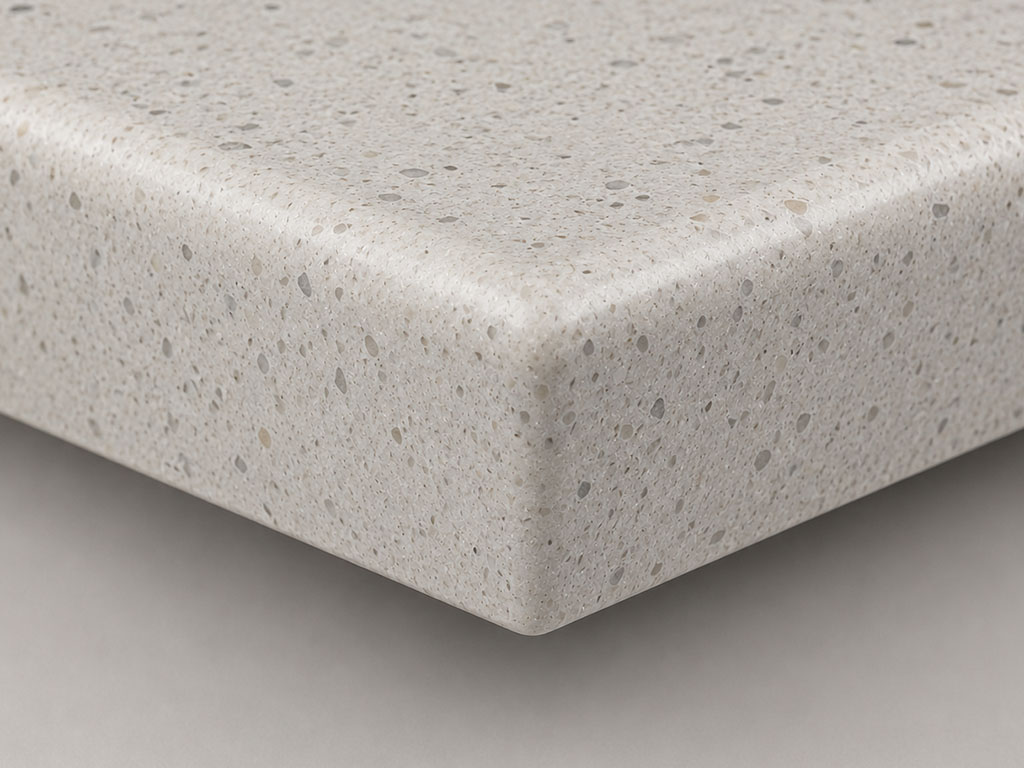
Bullnose and Half Bullnose Edge
The full bullnose is a fully rounded edge, curved on both the top and the bottom into a smooth half-circle. It’s soft, classic, and very family-friendly, which is why it pairs so often with granite and marble. The half bullnose, sometimes called a demi bullnose, rounds only the top. That gives a softer feel while still reading a bit more current than a full bullnose. They’re both forgiving and easy to clean.
Pencil Edge
A pencil edge is a subtle, lightly rounded profile that looks like the rounded side of a pencil. It’s clean and understated, and it’s a favorite for bathroom vanities and smaller surfaces. The thin, simple line works in both modern and traditional rooms. Because there’s so little detail to catch dirt, it’s one of the lowest-maintenance edges around.
Ogee Edge
The ogee edge is the showpiece of the traditional world. It’s an S-shaped curve, concave flowing into convex, that adds real drama and a sense of luxury. It’s stunning on marble or granite in a formal kitchen. The trade-offs are real, though. The detailed curve takes more skill and labor to fabricate, and those grooves hold onto spills and grime, so it’ll ask for more regular cleaning.
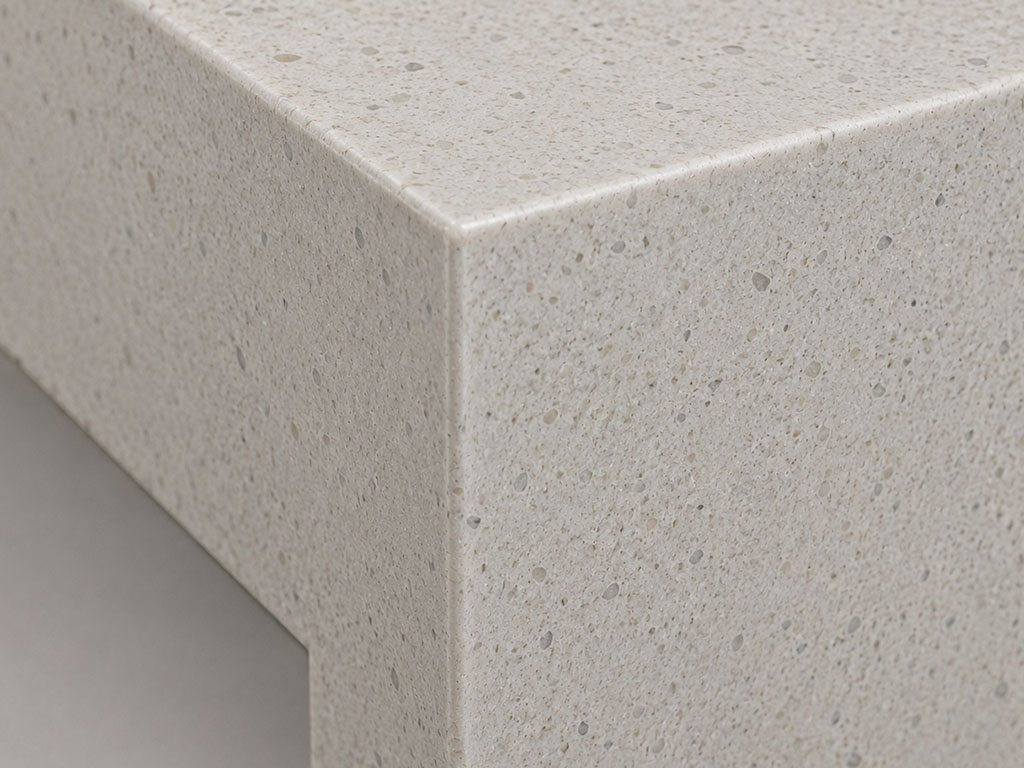
Waterfall Edge
A waterfall edge isn’t a corner profile at all. Instead, the countertop material runs straight down the side of an island or cabinet to the floor, like a sheet of water. It creates a bold, seamless block of stone that has become one of the hottest trends in high-end design. It looks especially striking on quartz and porcelain, where book-matched veining can flow down the side. It’s a statement piece, and it uses more material, so it sits at the premium end.
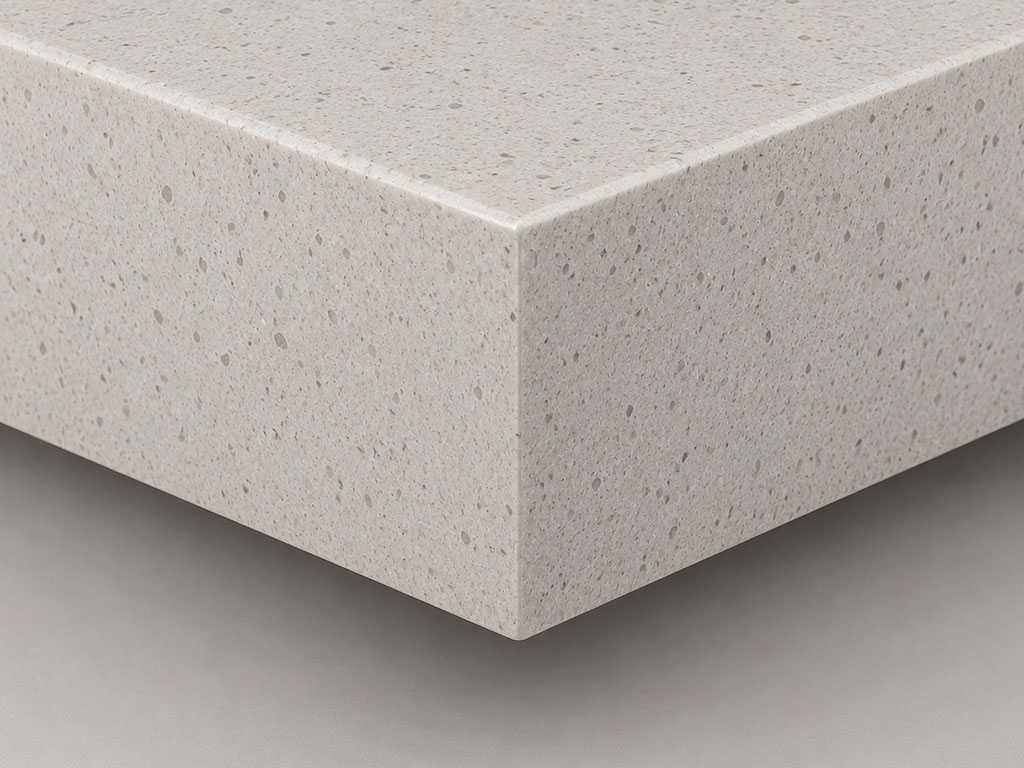
Mitered Edge
A mitered edge joins two pieces of slab at a 45-degree angle to create the look of a much thicker countertop without the weight or cost of a solid block. The seam’s tucked into the corner, so the finished edge looks like one continuous piece. It’s a clean, architectural choice that designers love for modern islands. It works best on engineered materials like quartz and on porcelain, where the fabrication’s precise and the color is consistent.
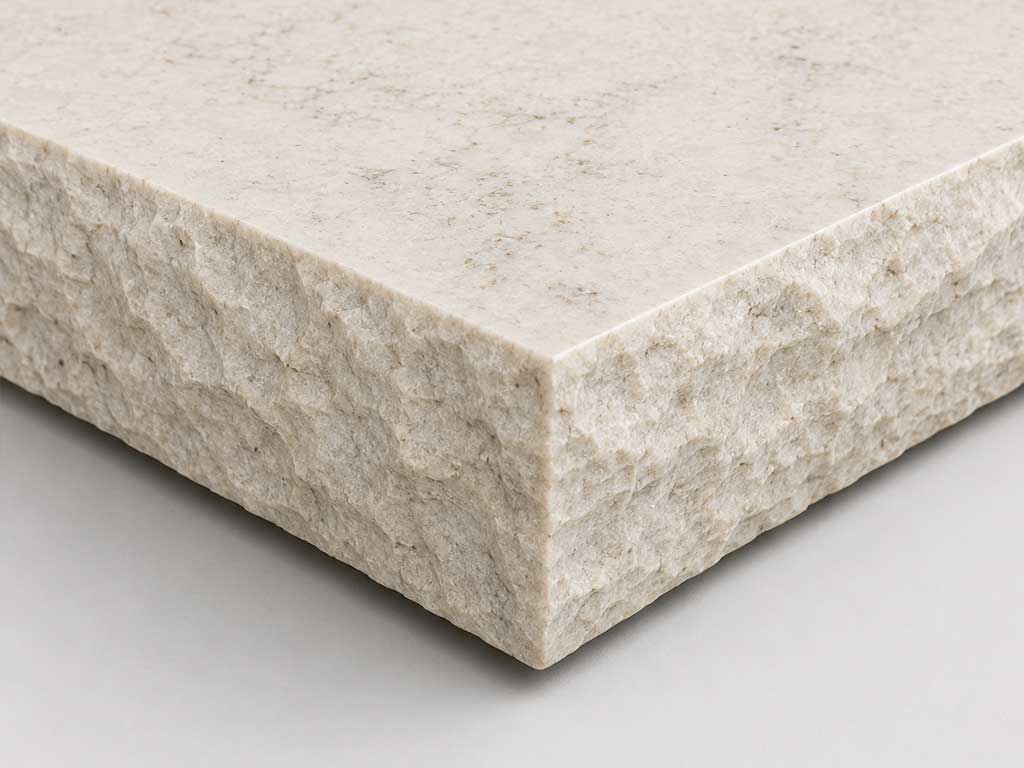
Chiseled Edge
A chiseled edge has a rough, broken face that looks hand-hewn, like the stone was split rather than cut. It’s the most rustic profile on the list, and it brings a natural, organic texture that suits farmhouse, Tuscan, and Old World kitchens. It works best on thicker natural stone like granite or marble, where the raw edge shows off the material’s depth. It isn’t for everyone, since the uneven surface catches more dust and feels coarse to the touch. Still, for a warm, handcrafted look, nothing else comes close.
Matching Countertop Edge Profiles to Your Material
Not every edge works on every slab. The material decides which countertop edge profiles are possible, so it’s smart to choose the surface and the profile together. As a Houston quartz manufacturer, Meta Surfaces fabricates across all of these categories, and the rules of thumb below hold up in most projects.
Quartz and Solid Surface
The most flexible option. Engineered quartz is dense and consistent, so it handles everything from a sharp square edge to an ogee or a waterfall. Mitered and waterfall edges look especially clean on solid surface because the color runs all the way through.
Granite
A hard natural stone that takes most profiles well, including bullnose, beveled, and ogee. Very sharp square corners can be a little chip-prone, so many homeowners soften them with an eased or half bullnose cut.
Marble and Quartzite
Marble is softer and prefers gentler profiles like eased, pencil, or bullnose that resist chipping at the corner. Quartzite is harder and behaves more like granite, opening the door to beveled and ogee detail.
Porcelain
Porcelain slabs are thin and tough, which makes them a natural fit for mitered and waterfall edges that build up a thicker, architectural look. The mitered joint hides the slim profile and gives a substantial finished edge.
How to Choose the Right Countertop Edge Profile
With the profiles and materials sorted, choosing the right countertop edge profile usually comes down to four questions about the space and the people in it.
What’s the kitchen style?
Modern and minimalist rooms lean on square, eased, mitered, and waterfall edges for clean lines. Traditional and transitional rooms suit ogee, full bullnose, and beveled profiles that add classic detail.
Who lives there?
Homes with young kids or older adults do better with rounded profiles. Bullnose and eased edges have no sharp points, so they’re safer to bump into and less likely to chip.
How much cleaning is realistic?
Simple edges like eased and pencil wipe down fast. Detailed profiles like ogee have grooves that trap crumbs and film, so they need more frequent attention in a busy kitchen.
What’s the budget?
Basic profiles such as eased are often included in the slab price. Ornate or material-heavy edges like ogee, waterfall, and mitered add fabrication labor, so they raise the total.
There’s no single correct answer here. A young family building a first home and a designer finishing a luxury remodel will land on very different countertop edge profiles, and they’re both right. The goal’s a profile that fits the room, the household, and the material all at once.
Countertop Edge Trends in Houston Homes
Houston’s mix of fast new construction and high-end remodeling shows up clearly in its edge choices. On production builds across Katy, Cypress, and the wider metro, the eased edge still dominates. It’s clean, affordable, and it photographs well, so builders specify it by default. That isn’t likely to change soon.
The custom side tells a different story. In neighborhoods like River Oaks and The Heights, waterfall islands have become a signature move, often in dramatic book-matched quartz. Mitered edges are close behind, giving islands that thick, architectural slab look without the weight. Porcelain is gaining ground for Houston’s outdoor kitchens, where its heat tolerance and a clean mitered edge stand up to the Texas sun. Meta Surfaces has manufactured quartz and supplied natural stone to these projects from its northwest Houston facility since 2019, and the trend toward bolder, cleaner countertop edge profiles keeps building.
For broader fabrication and care standards behind these profiles, the Natural Stone Institute publishes industry guidance worth a look.